Stories are not all told alike. I always love the short films before Pixar movies, or Wallace and Gromit (if you haven’t seen this incredible example of stop-animation, please look up the one where they go to space with cheese), and the past few days, I have been falling in love with shorts again.
Two of these are filmed using yarn/felt (Lost&Found and A Love Story), and it’s inspired me to ask, “What more can paper do?”
I was looking for Beatles lyric videos in German and came across this gem.
I would say this has good “energy”
some good words for our distance learning
Then, curious what else a “kinetic typography” search would bring me, I found the two videos above.
—————————————————–
And one more “design” related thing, I have been wanting to post… The artists/music group, OK Go.
If you have never heard of them before, an entire afternoon could be spent binge-watching their videos.
I believe they took music videos into a new form (of design- playing with color, motion, sound, effects, and storytelling) and improved&reinvented their craft over and over again.
I am not sure how I got here, but I found this animator who makes very trippy/abstract/surreal works with repeating shapes, music, and what seems like animations done on After Effects. I especially like the organic themes on the first one. It’s foreign but familiar, and with the music and calm transitions, I felt relaxed while watching- these are almost meditative.
Here is an excerpt from a blog where Ben talks about his artistic process and background with art:
“Can you tell us about the process of making your work?
I do a lot of 3D work. I usually start with a 3D package like ZBrush and begin by sculpting and building basic forms. Then I refine those forms, render them, and then play with them in Photoshop. For my animations, I use unconventional methods for making motion in ZBrush and then composite everything in Adobe After Effects.” – http://orbmag.com/visual-arts/inner-space-art-of-ben-ridgway/
hellllllo- last week I went to Pennsylvania Academy of Fine Arts to see the Wake in the Woods exhibit, but also was fortunate enough to see all these great abstract works relating to our project. You guys should go- it’s free for Philly Uni students!
Two artists I found via Pinterest. I think these works of theirs in particular could communicate other abstracted ideas, like found in Invisible Cities.
A teacher from my school teaches this book to one class a year, and they spend a whole month doing projects on it. She didn’t do it with my class, so I don’t have my own work, but she sent me a collage she did based on the city, Hypatia.
“a city of beautiful blue lagoons but where “crabs were biting the eyes of the suicides, stones tied around their necks”
As I was searching for artists relating to work we are doing, I kept typing “abstract, reductionist art, sound to image” blah blah blah. I found some things, but not totally related to what we’re doing. BUT. When I started thinking specifically about Project 1.1 and the patterning we were encouraged to do, I decided to look up, “tessellation art, abstracted patterns, textile art” and found two great artists that I think you’d like. Also, a third who I LOVE, and more so does general abstract art (but who’s work is giving me Gustav Klimt energy). Not directly related, but I wanted to share also.
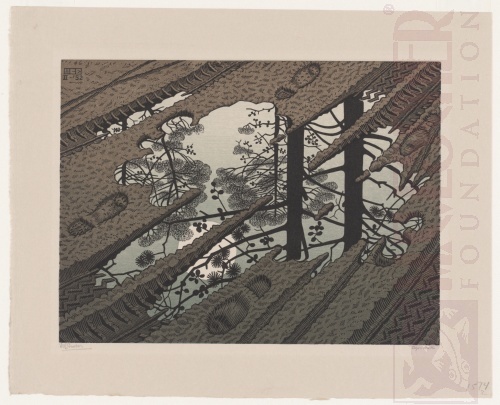
So first artist is MC Escher. He probably didn’t invent, but is credited with being the father of tessellations. Which you might remember from math class. He’s a mathematician and is known for ‘impossible reality’, tessellating, and patterned art/graphics. They are super cool. I’ve been stuck on his website for a solid 30 minutes cause he has an intense body of work. Here are some favorites I picked out.

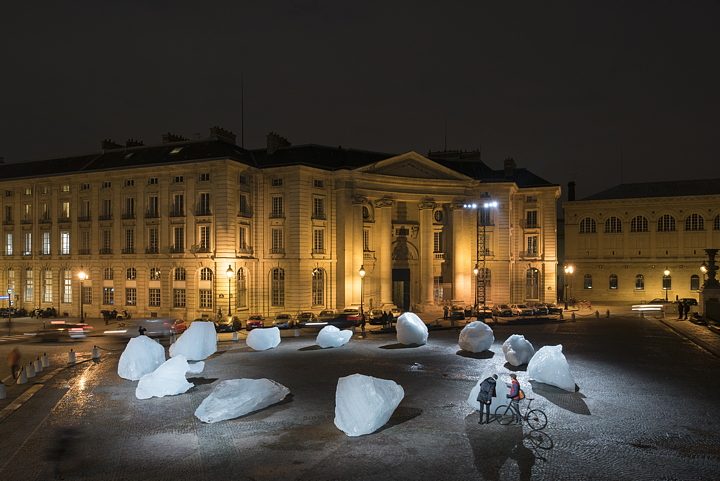 Ice Watch (2015) by Olafur Eliasson and Minik Rosing







 2020 Foundations